What is CBE?
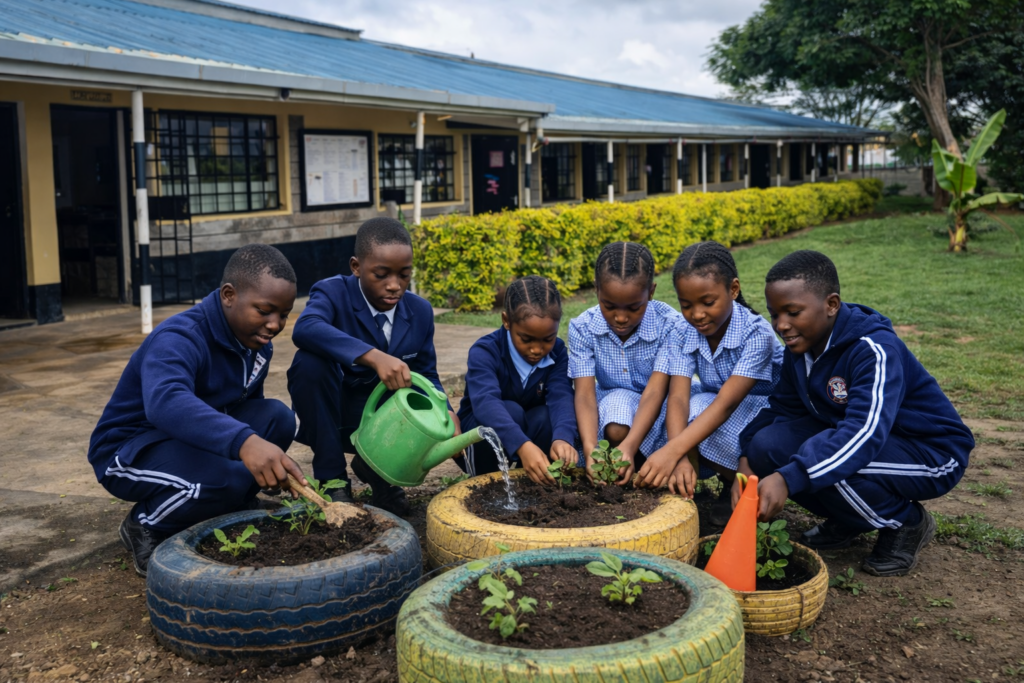
Competency Based Education (CBE) focuses on what learners can do with what they learn. Instead of memorising for one big exam, children build skills step-by-step through classwork, projects, practical activities, and regular feedback.
At Monark School, we combine strong literacy and numeracy foundations with values, creativity, and real-world learning—so every child grows in confidence and capability.
The 7 core competencies
These are the key skills learners develop across subjects and activities.
Communication & collaboration
Expressing ideas clearly, listening well, and working respectfully with others.
Critical thinking & problem solving
Asking good questions, analysing information, and finding practical solutions.
Creativity & imagination
Generating new ideas through art, design, writing, and innovation projects.
Citizenship
Understanding rights and responsibilities, respect, and care for community and country.
Digital literacy
Using technology safely and effectively for learning, research, and communication.
Learning to learn
Building study habits, self-management, and a growth mindset.
Self-efficacy
Confidence, resilience, goal-setting, and taking responsibility for progress.
We nurture the whole child—academically, socially, and emotionally.
Assessment journey (parent guide)
Assessment in CBE is continuous and supportive. It helps teachers understand progress and helps learners improve—without pressure.
1) Daily learning checks
Teachers observe class participation, oral work, reading, writing, and practical tasks to guide the next lesson.
2) Projects & performance tasks
Learners demonstrate understanding through activities like presentations, experiments, creative work, and group projects.
3) Feedback & support
We share clear feedback and provide support where needed—so learners build confidence and improve steadily.
4) Reporting to parents
Progress is shared through reports and parent-teacher conversations, focusing on strengths and next steps.
5) Transitions & readiness
As learners move from PP to Primary and to Junior Secondary, we focus on readiness—skills, habits, and independence.
6) National assessments (as guided)
Where applicable, learners participate in national assessments as guided by the Ministry of Education and KNEC.
Learning stages (PP1–Grade 9)
Pre-Primary (PP1–PP2)
- Play-based learning and routines
- Early literacy and numeracy foundations
- Social skills, values, and confidence
Primary (Grade 1–6)
- Strong reading, writing, and numeracy progression
- Practical learning across subjects
- Projects that build competencies and values
Junior Secondary (Grade 7–9)
- Deeper subject learning and study skills
- Career awareness and talent development
- Preparation for senior school pathways